Skin redness has more causes than people often realize — burns, allergic reactions, infections, eczema, and rosacea can all produce the same visible symptom, even though the underlying issue is different in each case.
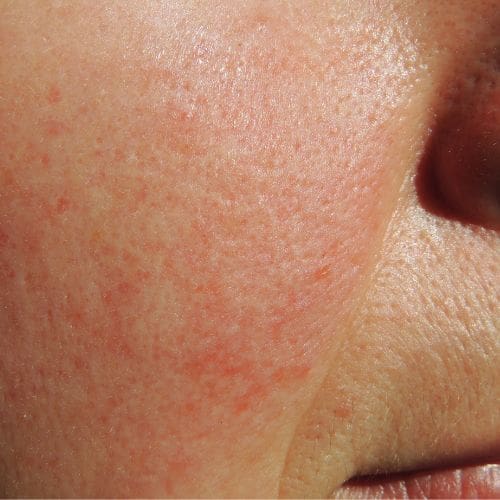
What we’ve seen, consistently, in our own experience with customers managing rosacea: the single most effective step isn’t finding the perfect addition to a routine. It’s elimination. Stop using all cosmetic products — all of them — and replace them with genuinely, absolutely pure formulas. There are very few brands that meet that bar. TARAMAR is one of them, built specifically on NoTox® technology to avoid the synthetic preservatives, fragrance compounds, and other chemical irritants that reactive, rosacea-prone skin reacts to first.
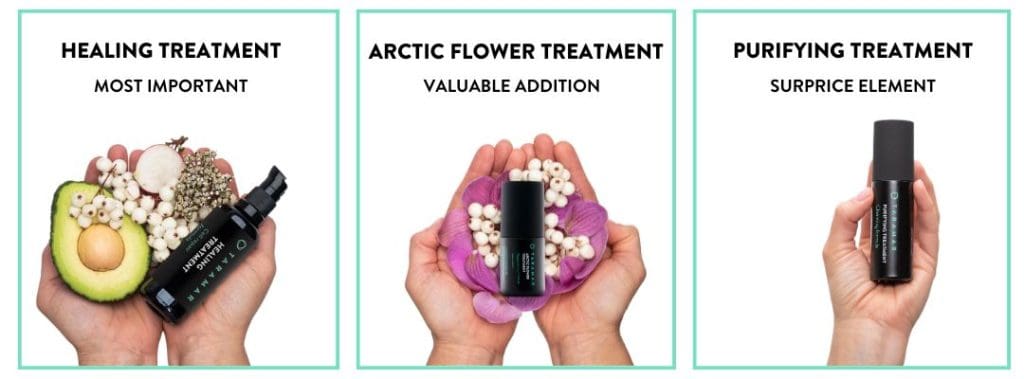
Add Healing Treatment to that pure-only routine, and the results tend to compound. It’s the product we consistently see make the biggest difference specifically for rosacea, and in our experience, this combination — full elimination of conventional products plus consistent use of Healing Treatment — gives people a genuinely high likelihood of significantly reducing, or in some cases resolving, their rosacea symptoms.
What TARAMAR Has Observed
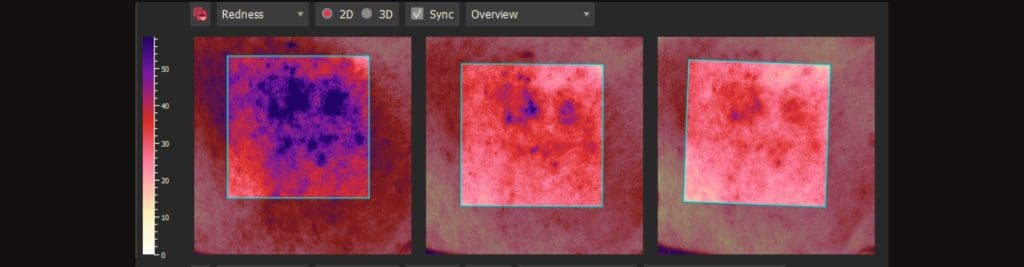
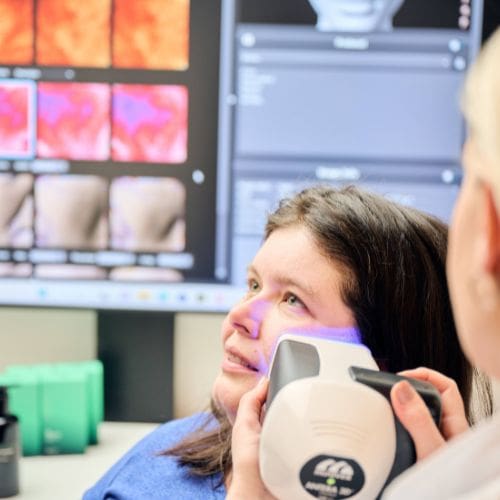
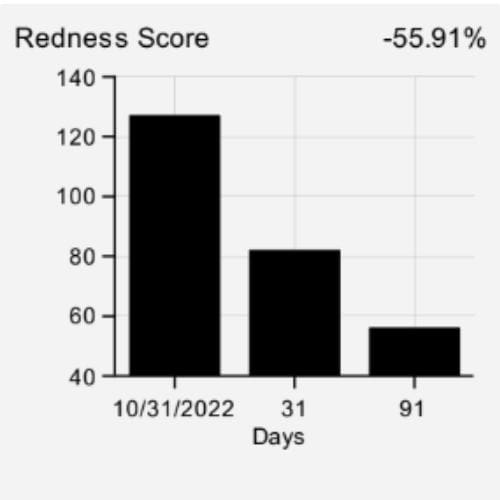
In documented use of Healing Treatment, Arctic Flower Treatment, Purifying Treatment, and Night Treatment together, visible recovery began within the first week and continued over a 90-day period. By day 30, the redness score — a measure of red-color density in the skin — had dropped by 33%. By day 90, the red coloration had largely disappeared.
This reflects customer and case experience rather than a large-scale independent clinical trial, and results will vary person to person — but the pattern has been consistent enough, across enough people, that we consider it a real and repeatable effect of the approach, not a coincidence.
What We Would Never Recommend
Soap, of any kind. Even gentle-seeming bar or liquid soaps virtually always contain chemical additives we specifically formulate to avoid. For rosacea-prone skin already fighting an uphill battle against irritation, we don’t consider any soap product an acceptable compromise.
Titanium dioxide sunscreens. Titanium dioxide is well documented in the research literature for its photocatalytic activity — under UV exposure, it generates free radicals (hydroxyl and superoxide species) at the skin’s surface. For skin that’s already inflamed and barrier-compromised, adding a free-radical generator directly to the problem is not a trade-off we’re willing to make.
Zinc oxide, with real reservations. Zinc oxide is often recommended as the “gentle” mineral sunscreen alternative, and we don’t reject it outright — but it isn’t the clean answer it’s often presented as. Zinc oxide nanoparticles have also been shown to generate free radicals under UV exposure, and at least one recent study found that zinc oxide nanoparticles specifically worsened skin damage when applied to already-compromised or sunburned skin — precisely the situation many rosacea sufferers are in.
What We Recommend Instead
For sun protection, our own TARASÓL is the option we’d point rosacea-prone skin toward first. It’s built entirely on UV-absorbing compounds from red algae rather than titanium dioxide, synthetic chemical filters, or zinc oxide nanoparticles — genuinely pure, in keeping with the same standard we hold the rest of the routine to.
The honest caveat: TARASÓL provides SPF 25–30, not the SPF 30–50 range many conventional sunscreens claim. That means it needs to be used carefully — reapplied more often, paired with shade and protective clothing during peak sun hours, and not treated as a license for extended, unprotected sun exposure. For rosacea-prone skin specifically, where sun exposure is itself a common trigger, that extra caution is worth taking seriously regardless of which sunscreen is used.
Bringing It Together
Our experience points to a simple, if demanding, protocol: remove every conventional cosmetic product from the routine, replace it entirely with genuinely pure formulations, and let Healing Treatment do the specific work it does best for rosacea-prone skin. It’s a bigger ask than adding one more serum to an existing routine — but in our experience, it’s the approach that actually gets results.
Rosacea is a diagnosed medical skin condition, and its severity and triggers vary widely from person to person. This reflects TARAMAR’s own clinical experience and product philosophy, not a substitute for a dermatologist’s individualized guidance — anyone experiencing persistent redness, flushing, or visible blood vessels should have it properly evaluated.
Sources on zinc oxide / titanium dioxide free-radical activity
- Wu, J., et al. “Titanium dioxide and zinc oxide nanoparticles in sunscreens: focus on their safety and effectiveness.” PMC.
- “Zinc oxide nanoparticles exacerbate skin epithelial cell damage… following UVB irradiation-induced skin injury.” PMC, 2024.
- Therapeutic Goods Administration (Australia). “Literature review on the safety of titanium dioxide and zinc oxide nanoparticles in sunscreens.”